Sustainable Development

Since its inception, the Asia-Europe Foundation (ASEF) has initiated several dialogue platforms amongst stakeholders in Asia and Europe on sustainable development and environmental issues. Reflecting priorities and needs from stakeholders at international, regional, and national levels, ASEF’s sustainable development and environment programmes focus on contributing to the global debate on the post-2015 development agenda, climate change policy and practices, and other environmental issues. ASEF’s contribution is made through multi-national research and case studies projects, consultation process, and capacity-building and training activities.
Since its inception, the Asia-Europe Foundation (ASEF) has initiated several dialogue platforms amongst stakeholders in Asia and Europe on sustainable development and environmental issues. Reflecting priorities and needs from stakeholders at international, regional, and national levels, ASEF’s sustainable development and environment programmes focus on contributing to the global debate on the post-2015 development agenda, climate change policy and practices, and other environmental issues. ASEF’s contribution is made through multi-national research and case studies projects, consultation process, and capacity-building and training activities.
At the 10th ASEM Summit (ASEM10), which took place in October 2014 in Milan, Italy, Asian and European leaders reaffirmed their joint commitment to work together with other UN members to agree on an ambitious, universal and transformative post-2015 development agenda. In response to this call by ASEM leaders, the ASEF’s activities in the area of Sustainable Development strengthened a consultative project on Sustainable Development Goals (SDGs), contributing to the global debate on the post-2015 development agenda.
The Asia-Europe Environment Forum (ENVforum), established in 2003, collaborates with top environmental institutions to work on pertinent sustainable development issues. ENVforum’s members consist of ASEM SMEs Eco-Innovation Center (ASEIC), Hanns Seidel Foundation (HSF), Institute for Global Environmental Strategies (IGES) and Swedish International Development Cooperation (Sida).
The ENVforum’s main focus is currently on the post-2015 development agenda, specifically towards the need for Sustainable Development Goals (SDGs) to replace the outgoing Millennium Development Goals (MDGs).
In 2014, the ENVforum participated in the first annual Sustainable Development Transition Forum (SDTF) and Sustainable Development Planning Network for Asia and the Pacific (SDplanNet-AP). The 2 high-level global platforms brought together more than 60 policy-makers and experts in sustainable development. The stakeholders welcomed the opportunities for dialogue, as well as interdisciplinary knowledge-sharing with their science-policy-practice counterparts.
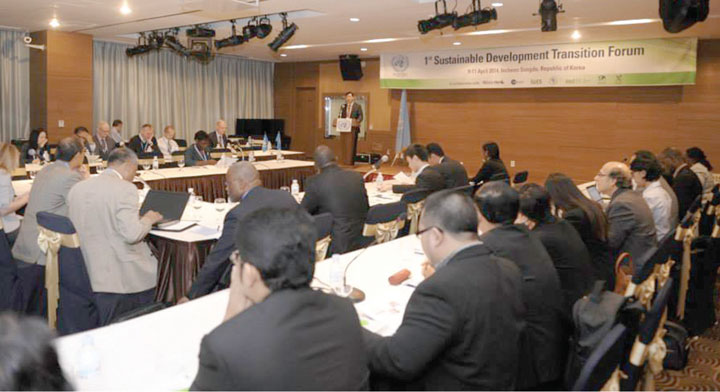 Head of Office of UNOSD giving his opening remarks at the 1st Sustainable Development Transition Forum
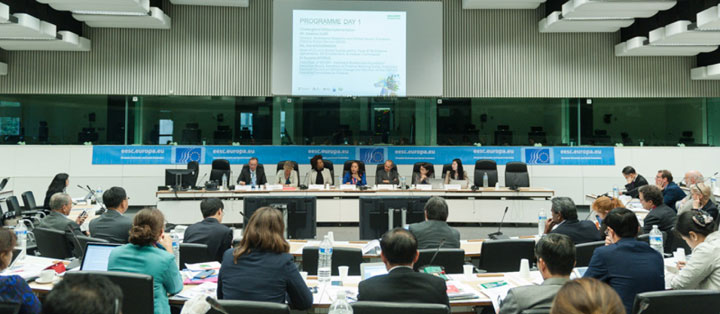
The ENVforum also co-organised a workshop on climate change. It was designed as a platform for the ASEAN diplomats to establish common understanding of regional challenges posed by climate change in preparation for upcoming sessions of the Conference of the Parties.
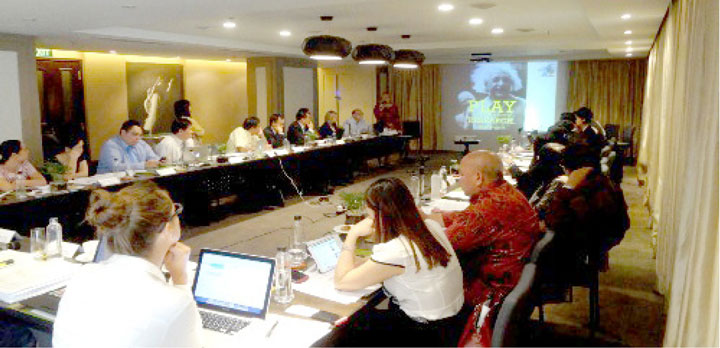 Participants at the workshop on climate change
The ENVforum Conference on Means of Implementation for the Post-2015 Development Agenda was held to examine the outcomes of the SDG Open Working Group consultation process. Leading experts held discussions on the feasibility of the new sustainable development landscape and on financing SDGs at a national level.
The ENVforum also spearheaded research initiatives in SDG implementation in 2014, organising research coordination meetings in Brussels and Hanoi. Their findings will be published in Part III of the Small Planet Reports in 2015.


ASEF’s work in the area of environment addresses various issues on climate change and its impact across Asia and Europe. In 2014, ASEF also cast light upon other equally urgent topics such as sustainable water management and measures for food safety.
As climate change continues to present challenges to the global community, ASEF in partnership with the Parisbased think-tank Asia Centre launched a joint series focusing on the critical role of energy. Organised ahead of the 21st Session of the Conference of the Parties to the UNFCCC, which is due to take place in the final quarter of 2015 in Paris, France, the primary objective of the project is to gain a deeper understanding of global energy trends and developments in Asia and Europe that affect regional policy-making and cooperation efforts.
This 2-day seminar examined closely key issues arising from China’s coal industry, from both national and global perspectives. Seminar articipants included leading domestic and international organisations such as the International Energy Agency (IEA). Outcomes from the high-level discussions included detailed observations about the wider global implications of the role of coal within China’s energy mix and the impact of this on the global climate in the coming decades.

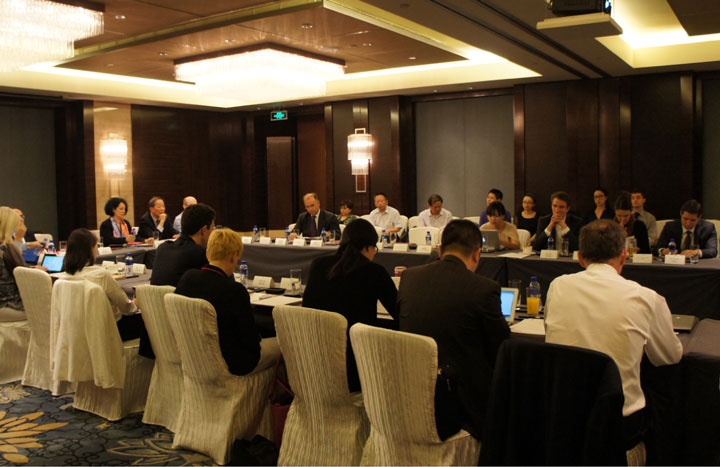 Participants at the seminar on energy and climate change
Organised in conjunction with Zhejiang University’s Cultural China Annual Forum, the ASEF University Alumni Network (ASEFUAN) held their Annual General Meeting (AGM) and 13th ASEFUAN Academic Conference in July 2014 in Hangzhou, China. This year’s event focused on the theme of Managing Our Water Resources Sustainably: The Roles of Youth, Education and Cooperation between Asia and Europe.
The conference was hosted by the Centre for Confucian Entrepreneurs and East Asian Civilisations at Zhejiang University. Almost 100 participants, including 13 experts in the field of water resources, security and sustainability, shared examples from their own countries and discussed best practices in small working groups.
During the AGM, the ASEFUAN Executive Committee (ExCo) reported on the activities of the past year and a new ExCo for 2014-2015 was elected.
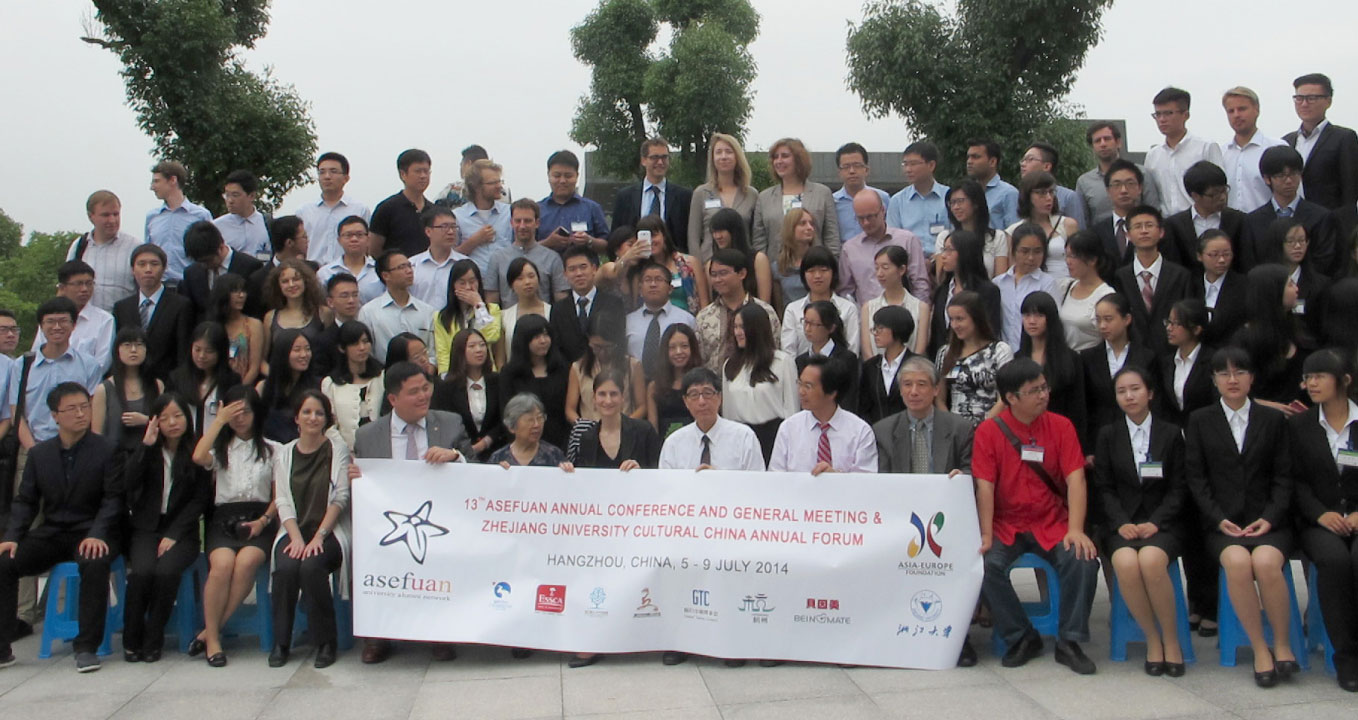 Participants of the ASEFUAN Annual General Meeting 2014

Designed to enhance the exchange and cooperation among ASEM partners on sustainable water management, this seminar provided a useful platform for policy exchange, information sharing, networking and the development of new technologies and products.
The seminar focused on 3 areas:
Ministry of Foreign Affairs, China
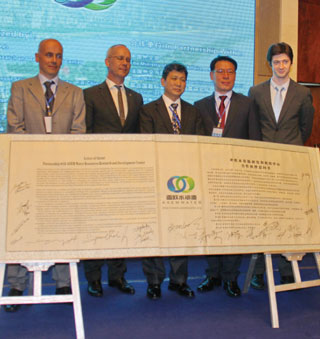 Signing ceremony of a Memorandum of Understanding by participating organisations
Ministry of Foreign Affairs, China
As part of the ASEM Food Safety Week, this seminar brought together more than 300 attendees from various food industries and sectors to share knowledge, experiences and expertise. In line with the event theme of Promoting Cooperation and Coordination, the food industry specialists and government officials discussed and exchanged views on national and global challenges in promoting and implementing measures for food safety.
Throughout the seminar and training sessions, participants emphasised the importance of food safety across the complete food production cycle, spanning the stages of cultivation, processing, transport and retail – what the food industry refers to as ‘from farm to fork’.

Ministry of Foreign Affairs, China
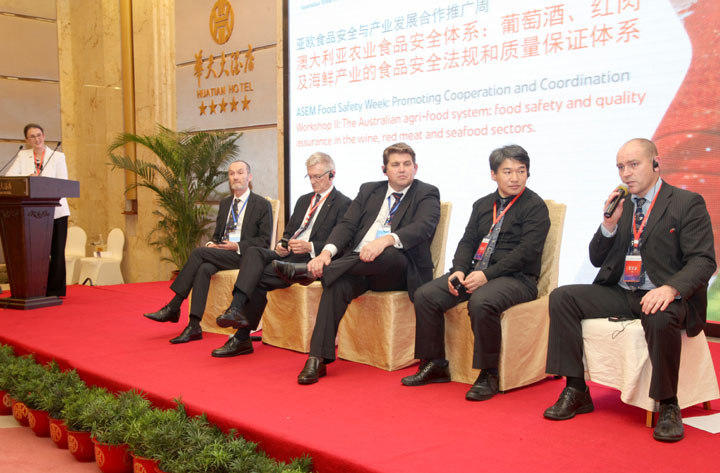 Panelists of Workshop during the Q&A Session
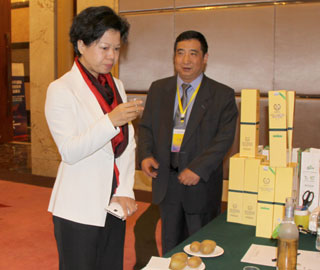 Vice-Mayor of Changsha, Ms ZHANG Yingchun (left) visiting the Exhibition Hall at the ASEM Food Safety Week
Ministry of Foreign Affairs, China