Education
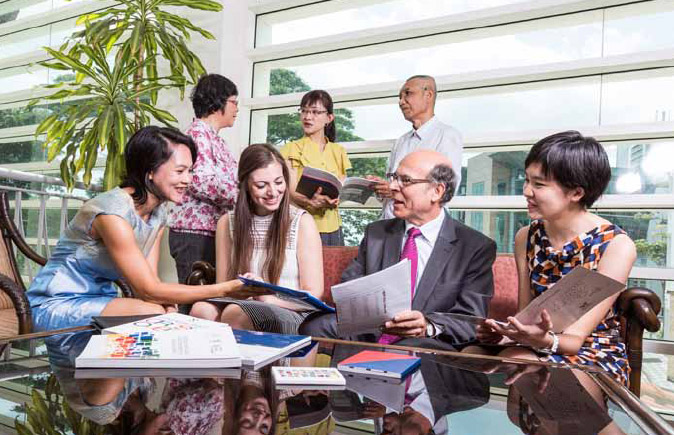

In the field of education, ASEF has set in motion projects which contribute to education policy dialogue and facilitate youth networks. Through interdisciplinary and pragmatic approaches as well as the integration of ICT as an essential component, ASEF’s education projects strengthen collaboration between education institutions, exchange among young people and link them to the ASEM Education Process and ASEM Leaders’ Meetings.
In the field of education, ASEF has set in motion projects which contribute to education policy dialogue and facilitate youth networks. Through interdisciplinary and pragmatic approaches as well as the integration of ICT as an essential component, ASEF’s education projects strengthen collaboration between education institutions, exchange among young people and link them to the ASEM Education Process and ASEM Leaders’ Meetings.
ASEF’s Education Policy Programme stimulates practice-based and policy-oriented dialogues and solutions with a focus on cooperation between the education, business and industry sectors, Lifelong Learning, and Technical and Vocational Education and Training (TVET) as key priorities of the ASEM Education Process.
In preparation of the 5th ASEM Education Ministers’ Meeting (ASEM ME5) in April 2015 in Riga, Latvia, ASEF participated in 2 ASEM Senior Education Officials Meetings that were held consecutively in China and Latvia.
ASEF presented its contributions to the ASEM Education Process following the 4th ASEM Education Ministers’ Meeting (ASEM ME4), which took place in 2013 in Kuala Lumpur, Malaysia.
The Senior Officials discussed trends and developments in 4 priority areas as identified at ASEM ME4:
Amongst ASEF’s key contributions to the ASEM Education Process are projects in the fields of balanced mobility, lifelong learning and university-business cooperation.
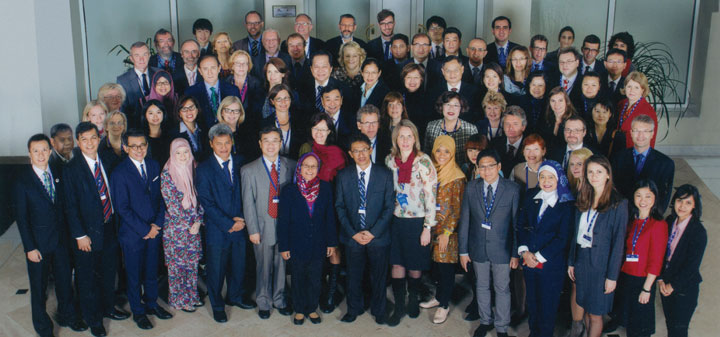 ASEM Senior Education Officials at their meeting in Latvia
In line with its charter to provide a platform for researchers, practitioners and policy-makers across Asia and Europe to develop lifelong learning, the ASEM LLL Hub – with the support of ASEF – organised a series of meetings in 2014:
The meetings promoted comparative research in lifelong learning and research-based lifelong learning policy recommendations, focusing on 5 areas:
Results were published in the form of policy briefs and the ASEMMagazines for Lifelong Learning –
Lifelong Learning and the Force of Comparison and Lifelong Learning and the Digital Revolution. More than 100 researchers from 63 universities in 23 countries are currently part of the ASEM LLL Hub research network.

Aarhus University, Department of Education (DPU)
Danish Ministry of Foreign Affairs (DMFA)
Danish Ministry of Education (DMOE)
The projects under ASEF’s Young Leaders Programme are platforms for dialogue and solution-centred and pragmatic skills development, which enable youth to establish networks and create direct connections with the ASEM policy-makers.
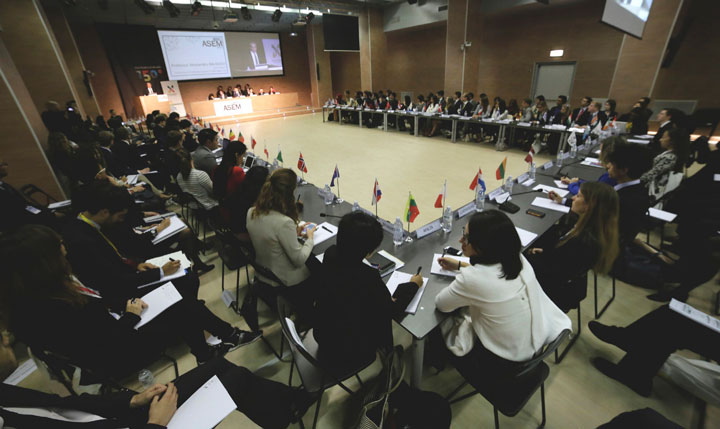
In conjunction with the 10th Asia-Europe Meeting (ASEM10) Summit, 127 students representing 49 ASEM member countries participated in a simulation of the ASEM Summit to exercise their skills in multilateral negotiations and diplomacy.
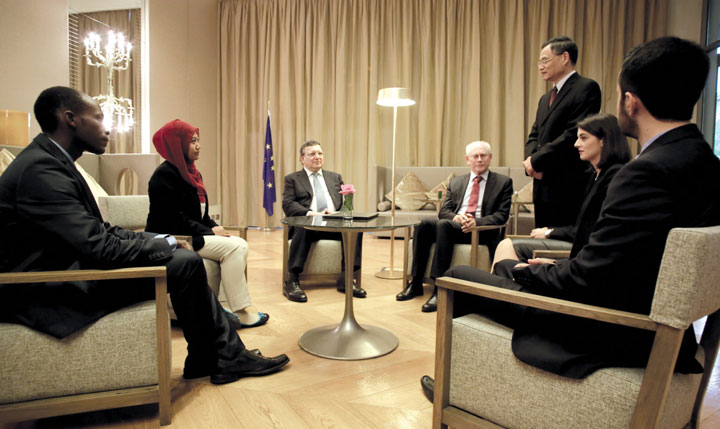
Model ASEM 2014 consisted of plenary sessions, bilateral meetings and working groups. In the discussions’ spotlight were ASEM’s 3 pillars (political, economic and socio-cultural) and public health issues. The student participants jointly developed a consensusbased Chair’s Statement, which 4 student representatives later personally handed over to the Presidents of the European Council and of the European Commission, H.E. Herman Van Rompuy and H.E. José Manuel Barroso.
Several students also received invitations to share their experience at Model ASEM with their respective national leaders, including: H.E. Joseph MUSCAT, Prime Minister of Malta, H.E. Didier BURKHALTER, President of Switzerland, and Mr Syed Tariq FATEMI, Special Assistant to the Prime Minister of Pakistan.

The ASEF Classroom Network (ASEF ClassNet) is ASEF’s primary channel to connect secondary and high schools, educators and students in Asia and Europe. Launched in 1998, it provides opportunities for collaborative learning and intercultural learning exchanges. At the same time, it functions as a cyber-classroom for students and educators alike to forge stronger bi-lateral networks and partnership through common online projects and face-to-face exchanges.
In 2014, more than 200 teachers and 3,884 students from 113 schools in 31 ASEM countries worked jointly on online collaborations (ASEF ClassNet Projects). 6 project groups received awards in recognition of their outstanding achievements: