
ASEF’s activities in the area of Economy and Society address the impact of the economic climate on society. The activities give rise to innovative and integrated policy recommendations through the collective involvement of government and civil society representatives. In 2012, ASEF engaged financial experts, think-tanks and the media from ASEM countries to examine the immediate reforms needed in the International Monetary System. ASEF also commissioned a research study in this field, ‘The EU through the Eyes of Asia/Asia in the Eyes of Europe’, which provided unique insights into the relations between Asia and the European Union in an era of economic uncertainty.
|
2 - 7 July 2012
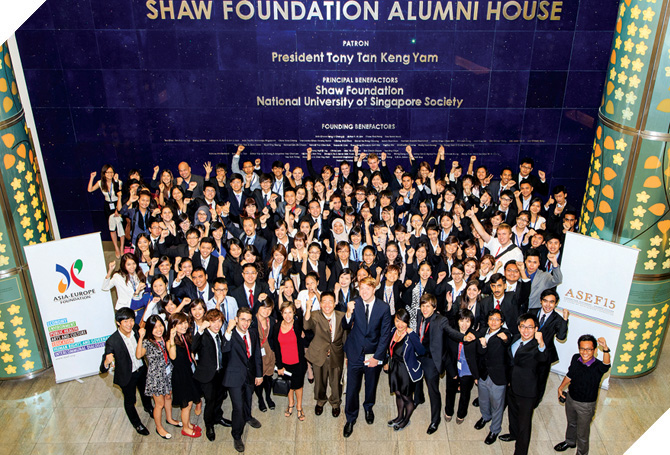
Singapore Model ASEM (Asia-Europe Meeting) is a simulation activity organised to generate interest and increase knowledge and awareness of the ASEM process among young people. It also provides students with the opportunity to better understand the complexity of international relations. Under the theme ‘Friends for Peace, Partners for Prosperity’, the two-day ASEM simulation conference brought together 126 participants from 21 ASEM countries. The participants developed a 46-point Chair’s Statement that covered topics such as foreign direct investment, intellectual property rights, sustainable development, the European debt crisis, migration flows in ASEM countries, protection of refugees, social cohesion, civil societies and inter-communal dialogues, education, and a way forward for the ASEM Process. |
 |
  
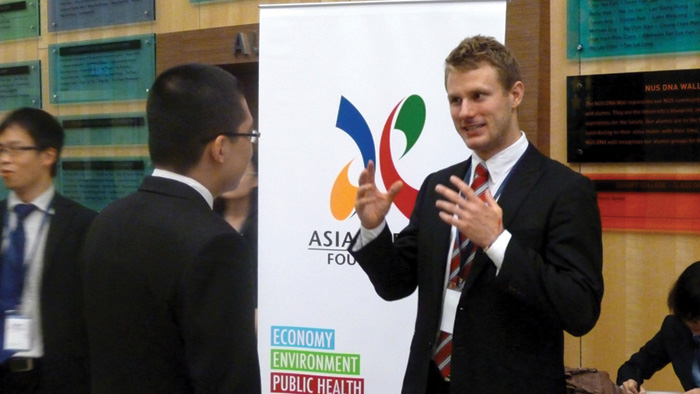 ^ Model ASEM 2012 participants chatting during one of the breaks |
|
12 - 13 September 2012
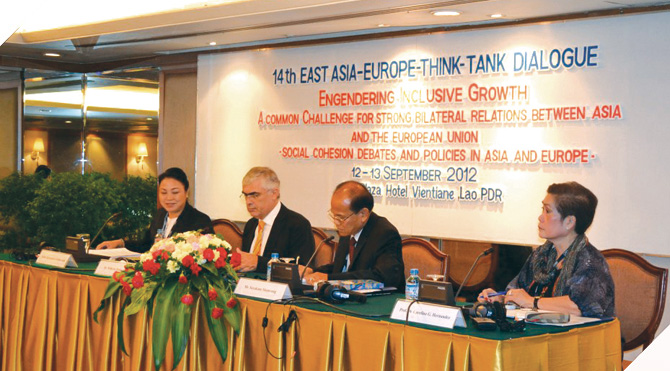
Vientiane, Lao PDR The ASEM process and the consequences of the EU debt crisis for Asia-Europe bi-lateral cooperation were key topics debated at the 14th East Asia - Europe Think- Tank Dialogue in September 2012. The Dialogue had a specific focus on social development and cohesion programmes that seek alternative methods to protect the most vulnerable in our societies. Representatives from renowned Asian and European think tanks such as ASEAN+3 Macroeconomic Research Office (AMRO), Institut Français de Relations Internationals (IFRI), the Institute of World Economics |
|
and Politics, Chinese Academy of Social Sciences (IWEP-CASS), and the European Policy Centre (EPC) presented on the fallout of the EU debt crisis and the current policies to promote social cohesion in Asia and Europe. The workshop, which was held in Vientiane, Lao PDR, was spearheaded by the Konrad Adenauer Stiftung (Germany), with the support of ASEF, the Institute for Strategic & Development Studies (The Philippines) and the Institute for Foreign Affairs (Lao PDR). |
|
13 October 2012
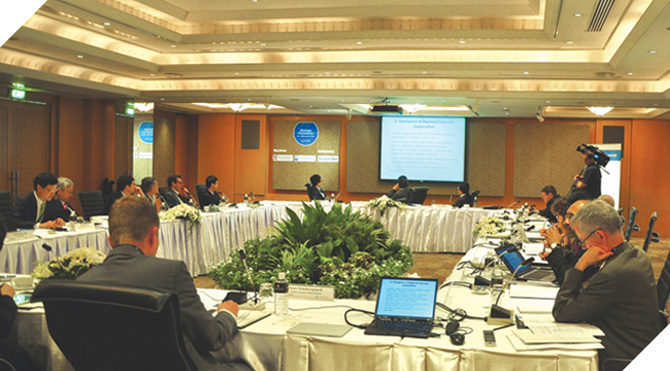
Bangkok, Thailand Organised with the assistance of the Royal Institute of International Affairs Chatham House, the 6th Asia- Europe Editors’ Roundtable aimed to increase ASEF and ASEM visibility among media and financial experts in Asia and Europe. The Bangkok Post, Thailand’s largest English daily, was the Media Partner for the event. Held in conjunction with the 10th ASEM Finance Ministers’ Meeting (FinMM) in Bangkok, Thailand, 23 senior editors and financial experts from 17 ASEM countries discussed the shifting economic reality and examined the reforms needed in the International Monetary System in both regions, in line with the Roundtable’s theme was to promote Asia-Europe cooperation in overcoming financial crises. |
|
Immediately after the Roundtable ASEF’s Deputy Executive Director presented the discussion’s highlights to the Senior Finance Officials of ASEM in Bangkok. The final outcomes of the Roundtable were analysed and published in the form of a Programme Paper by the Royal Institute of International Affairs Chatham House. 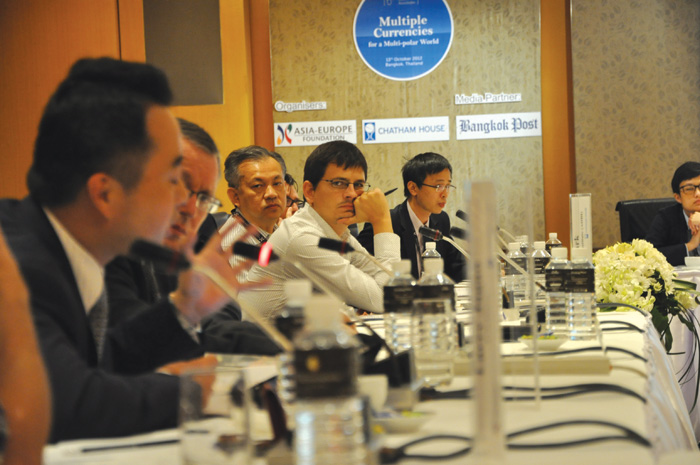 ^ Speakers during the discussions at the 6th Asia-Europe
Editors’ Roundtable
|